Thursday, May 24, 2012

Cecilia Payne-Gaposchkin Biography


Cecilia Helena Payne was born  May 10, 1900, in Wendover, England, the eldest of three children born to Edward John and Emma Leonora Helena (Pertz) Payne of Coblenz, Prussia. Her father, a London barrister, died when she was four years old. Her mother, a painter and musician, introduced her to the classics, of which she remained fond throughout her life. Payne-Gaposchkin recalled that Homer's Odyssey was the first book her mother read to her as a child. She knew Latin by the time she was 12 years old, became fluent in French and German, and showed an early interest in botany and algebra. As a schoolgirl in London she was influenced by the works of Isaac Newton, Thomas Huxley, and Emmanuel Swedenborg.
Payne-Gaposchkin's career at Harvard began in 1925, when she was given an ambiguous staff position at the Harvard Observatory. By that time she had already published six papers on her research in the field of stellar atmospheres. That same year, she was awarded the first-ever Ph.D. in astronomy at Radcliffe. Her doctoral dissertation, Stellar Atmospheres, was published as Monograph No. 1 of the Harvard Observatory. A pioneering work in the field, it was the first paper written on the subject and was the first research to apply Indian physicist Meghnad Saha's recent theory of ionization (the process by which particles become electrically charged by gaining or losing electrons) to the science of measuring the temperature and chemical density of stars. Despite this, Payne-Gaposchkin's research remains highly regarded today; Otto Struve, a notable astronomer of the period, was quoted in Mercury magazine as saying that Stellar Atmosphereswas "undoubtedly the most brilliant Ph.D. thesis ever written in astronomy."
In 1926 when she was 26 years old, she became the youngest scientist to be listed in American Men of Science. But her position at Harvard Observatory remained unacknowledged and unofficial. It was not until 1938 that her work as a lecturer and researcher was recognized and she was granted the title of astronomer, which she later requested to be changed to Phillips Astronomer. From 1925 until 1938 she was considered a technical assistant to Shapley, and none of the courses she taught were listed in the Harvard catalogue until 1945. Finally, in 1956 when her colleague Donald Menzel replaced Shapley as director of the Harvard Observatory, Payne-Gaposchkin was "promoted" to professor, given an appropriate salary, and named chairman of the Department of Astronomy - the first woman to hold a position at Harvard University that was not expressly designated for a woman.From the 1920s until Payne-Gaposchkin's death on December 7, 1979, she published over 150 papers and several monographs, including "The Stars of High Luminosity" (1930), a virtual encyclopedia of astrophysics, and Variable Stars (1938), a standard reference book of astronomy written with her husband. She also published four books in the 1950s on the subject of stars and stellar evolution. Moreover, though she retired from her academic post at Harvard in 1966, becoming Emeritus Professor of Harvard University the following year, she continued to write and conduct research until her death. Her autobiography, writings collected after her death by her daughter, Katherine Haramundanis, was entitled Cecilia Payne-Gaposchkin:

Wednesday, March 28, 2012

Observation Hours 8

March 22, 2012
              Tonight there was a new moon. Its always kind of a bummer when you look up into the sky and you cant find the moon. You always sort of feel dumb when you look around and cant find the moon and then at last think that maybe its a new moon. New moon phases though are always good star viewing nights because then the moons shine doesn't abrupt or get in the way of any observations.

Observation Hours 7

March 8, 2012
          This night there was a full moon. I always find the full moon the coolest of all the moon phases. Its always a good night if theres a full moon. The moon lights up the night time sky in a way that can only be compared to the sun. Im looking forward to the next full moon phase.

Observation Hours 5-6

March 3, 2012
             This night I walked to the end of my street with my friends and roasted marshmallows. It was a good night but the sky was even better. Mars or what Im pretty sure was Mars was clearly visible in the sky. It might of been Jupiter or something but im pretty sure it wad Mars. The planet was one of the brightest objects in the sky and couldn't help but be noticed. There were unfortunaetly some clouds throughout the night obstructing our view from time to time but for the most part it was a very pleasant observation night.

APOD 3.8

March 20, 2012
              This APOD is my first video reflection. I really enjoyed the video about the creation and overall formation of the moon we see today. The one thing I learned from the video is that overall the moon we see today could easily change into something we can only imagine. The surface structures have changed so intensely over the many millions of years of abuse from comets and asteroids and other materials that impacted the moon. Also I did not realize that there is volcanic activity under the surface of the moon. To this day there might not be any volcanic activity but in the video there shows volcanic things happening when the large asteroids impact the moon.  

APOD 3.7

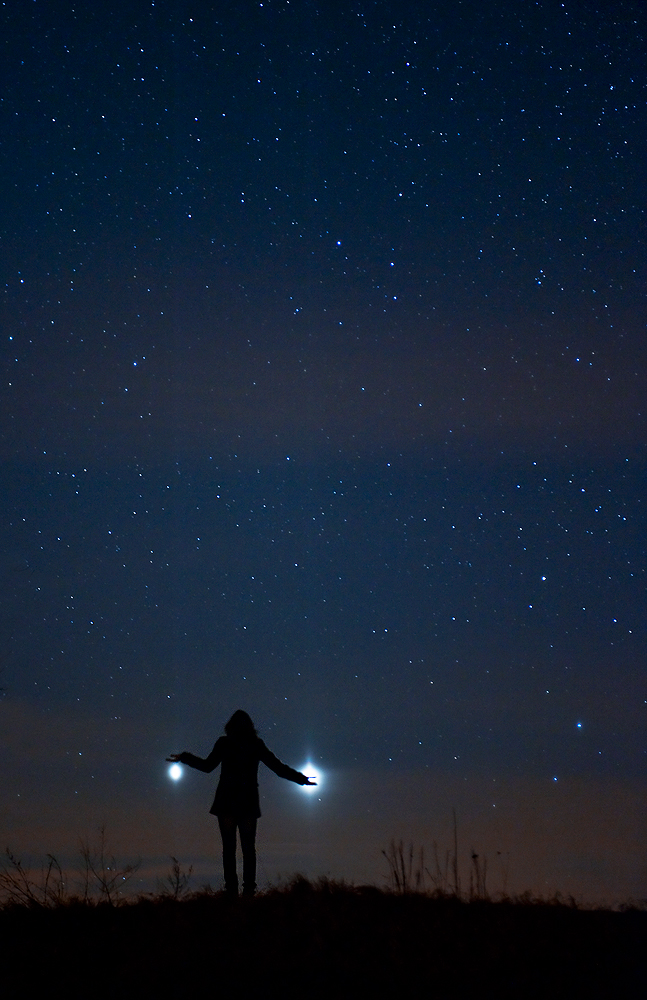
          The conjunction of Jupiter and Venus is a very cool and interesting site to see. The fact that no matter where you lived on Earth and were able to see the conjunction is another amazing fact in itself.I dont see how this is possible though because what if you lived on the opposite side of the planet thats obviously not physically able to see the two planets? I would think that the planets would not be visible if the planet was to then rotate so the planets were visible but it would then be daytime and the suns light would completely diminish the ability to see the planets. This picture reminds me of the leaning tower of pizza images, except its with planets which is much more interesting.

APOD 3.6

          Honestly at first glance I thought the picture was fake, as in some form of computer generated photo or something as its really pixelated. When reading the description and finding out this actually occured near San Jose, California I was amazed. This has to be the most amazing full moon image Ive ever seen. There have been many perfect nights here in Sarasota to view the moon but I wish i could have been standing on that hill, that would have been a life changing site to see. I still dont know what the description means though by the green rim. I dont see any hint or shade of green anywhere in the image.