Wednesday, March 28, 2012
APOD 3.5
This image is an artists rendition of five seperate images viewed of Jupiter. I found this picture interesting because it differs from the normal apod images displayed on the site. I have never seen an artists image chosen for the site until this one. The artist was very unique and extremely skilled to be able to draw the extensive ring cloud patterns on the surface of Jupiter. The images are very good and even display the giant red dot, as well as some of Jupiters closest moons. All in all a very interesting image to look at and study Jupiter from a different perspective.
Sunday, March 4, 2012
Astronomer- Percival Lowell
Percival Lowell born March 13, 1855. Died November 12, 1916. Born in Boston, Mass. Lowell was a very important astronomer in the early stages of the understandings of planetary existence. Lowell believed in planets beyond the at the time furthest known planet of Neptune. Ultimately discovering Pluto. Also known for his extensive studies of Mars and its odd canal like structures.
Based off this obsession of planets Lowell established an observatory is Flagstaff, Arizona. In his observatory he created two telescopes, a 12 inch and an 18 inch refractor telescopes. Lowell was convinced that there had to have been a superior alien civilization on Mars. He believed that the canals were definite proof of an intelligent civilization capable of utilizing the polar caps for water. Lowell even named dark spots on the planet "oases" as he hypothesized of their lake like parallel.
Lowells theories were widely criticized as other astronomers were not as accepting of Lowells beliefs. Nevertheless, despite all opposition Lowell published two books; "Mars and its Canals", and "Mars as the Abode of Life". Lowell never dropped his beliefs all the way until his death in 1916. Lowell was a very important astronomer who contributed a great deal of knowledge to our now current understandings of astronomical facts. Lowell was so beneficial to Astronomy that when naming the rings of Neptune one of the rings was named after him along with other astronomers who were influential in the field of Astronomy.
"Lowell, Percival." Complete Dictionary of Scientific Biography. Vol. 8. Detroit: Charles Scribner's Sons, 2008. 520-523. Gale Virtual Reference Library. Web. 4 Mar. 2012
Tuesday, February 14, 2012
APOD 3.4
This image first appealed to me as I had been watching lord of the rings and it reminded me of the giant eye at the top of the tower in the movie. The image above is of the the helix nebula from the vista telescope. The nebula is what forms after after a star. When a sun like star diminishes a gas like cloud called a nebula can form. The image is taken in infared as the colors of the nebula would be unseen to the naked eye. Its confusing to think that when a star nears the end of its life it basically explodes. Sending debris in every direction. Why would there be anything left? Would not all of the debris be sent, scattered across space. What force holds material back to create a object such as this?
APOD 3.3
I always enjoyed these types of photos. The long exposure images were always very appealing. This image taken from an observatory in the Atacama desert in Chile is very cool. I guess other than the unique image these pictures portray they actually have some astrological importance as well. When understanding the sky and the stars it is sometimes difficult to comprehend them as moving. Its obvious to see the sun as it appears to rotate across our sky, but stars are not as unique and don't have as much as an impact on our minds. These long exposure pictures help instill the idea of stellar motion. This also helps better understand the seasonal positions of constellations and where to identify them in different parts of the night throughout the year.
APOD 3.2
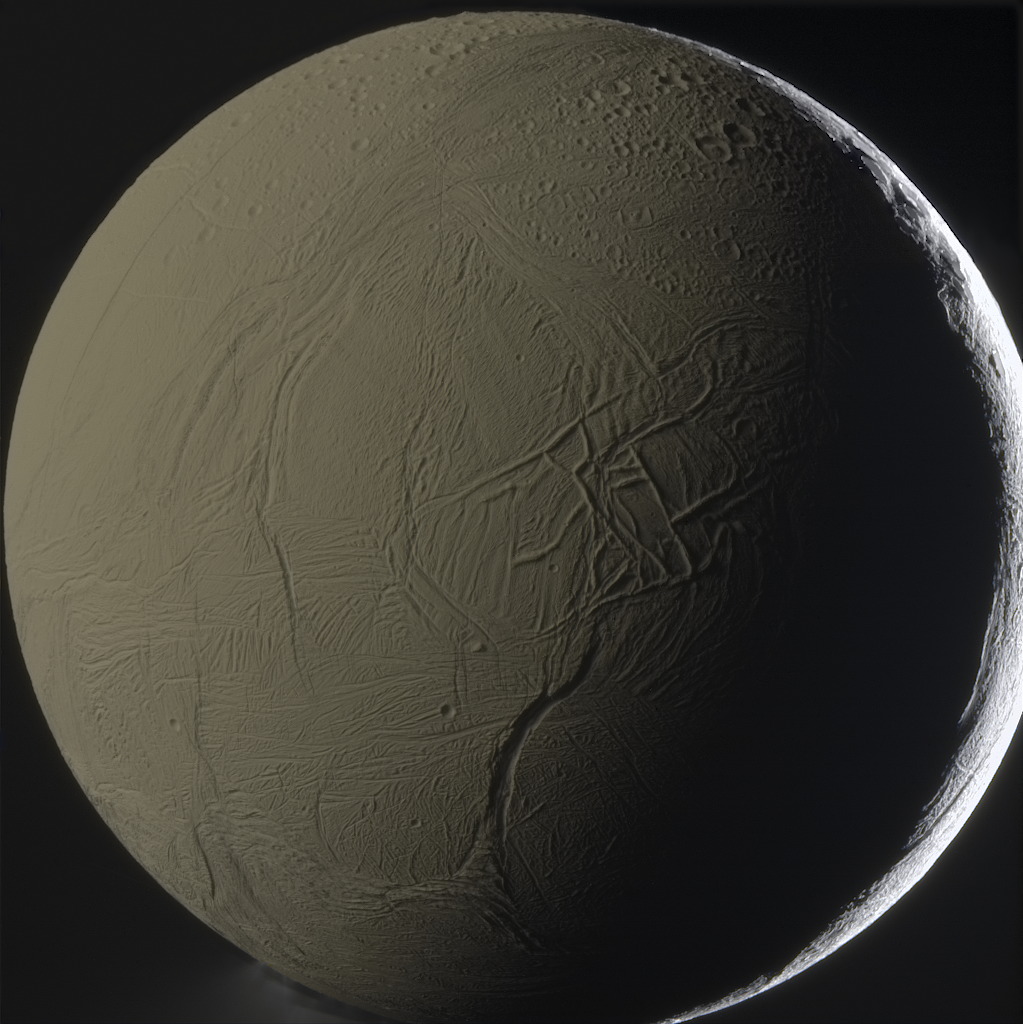
When i first viewed this image it appealed to me as it looks like a giant sand ball. The outer texture visually appears to be loose and sand like.The description says that the moon is being lit by Saturns light, which can obviously be seen on the right side of the image. However what is illuminating the rest of the moon? There must also be light coming from other nearby stars or other planets to allow the moon to emit light. The satellite which took the image contains evidense of the possibilities of ice crystals under the surface of the moon. This might explain the the surface composition.
APOD 3.1
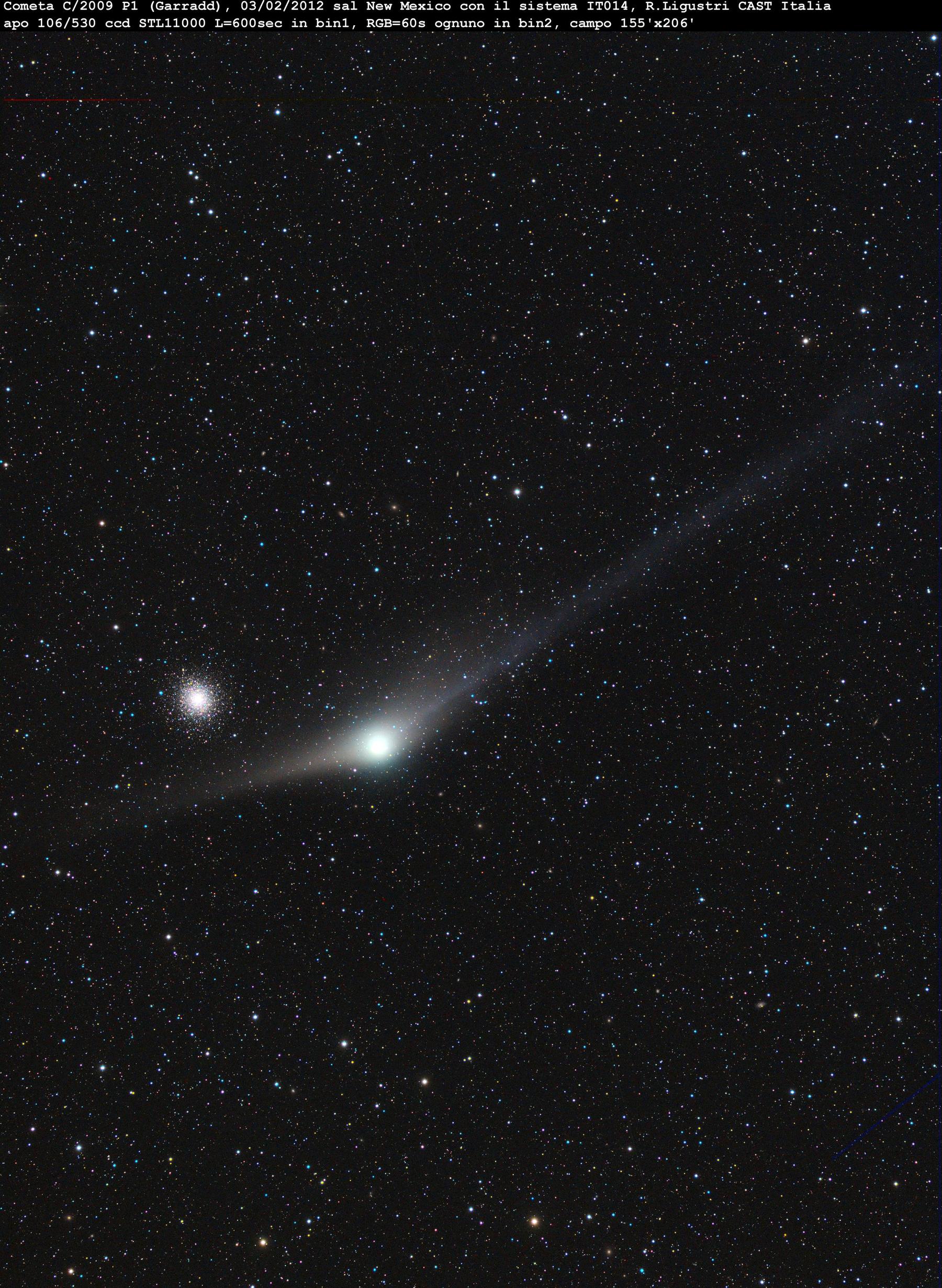
The image above is of a comet passing through the Hercules constellation. I was not viewing the night sky when it passed, however in the description it says that the comet would have been below the visibility for the naked eye. I did not know that the tail of the comet contained iron. I was under the impression the tail was simply dust and debree from whatever compound the core of the comet was made of. I assume this particular comet contains iron if its tail is composed of iron. The description states the tail is altered by space wind. This concept is confusiong as I try to assimilate it with wind on Earth. However this can not be the same as there is no oxygen is space.
Monday, February 13, 2012
Observation Hours 1-4
Feb 12, 2012 Stargaze 7-9pm
In the western sky we observed Pegasus, Cepheus and Cassiopeia. Also just after we started somewhere around 7:15 there was a satellite orbiting overhead. On the south western corner of the sky near the horizon there was Jupiter and Venus as well as Eridanus. In the eastern sky we saw Gemini, Canis Major, Lepus, Auriga and Orion. The binoculars were aimed at the plyeades. In the north we saw the big dipper and cancer. Directly above us we saw taurus (hyades)
Subscribe to:
Posts (Atom)